
Destination Guide Madagascar
Madagascar, the world’s fourth largest island, is a biodiversity hotspot unlike any other. With its lush rainforests, semi-arid deserts, and pristine beaches, Madagascar offers a diverse range of environments that are home to many species found nowhere else on Earth. Here is our dedicated Madagascar Travel Guide.
Highlights & Must-See Attractions
Antananarivo
- Rova of Antananarivo: The historical palace complex that offers insights into the island’s royal history and panoramic views of the capital.
Northern Madagascar
- Nosy Be: Famous for its aromatic ylang-ylang plantations and beautiful sandy beaches, ideal for relaxation and water sports.
- Tsingy de Bemaraha: A UNESCO World Heritage site, known for its dramatic limestone karsts and diverse wildlife.
Eastern Madagascar
- Andasibe-Mantadia National Park: Best known for the indri, the largest living lemur, and its lush rainforest that offers excellent hiking and wildlife viewing opportunities.
Southern Madagascar
- Isalo National Park: Renowned for its Jurassic sandstone landscapes, deep canyons, and rich flora and fauna.
Western Madagascar
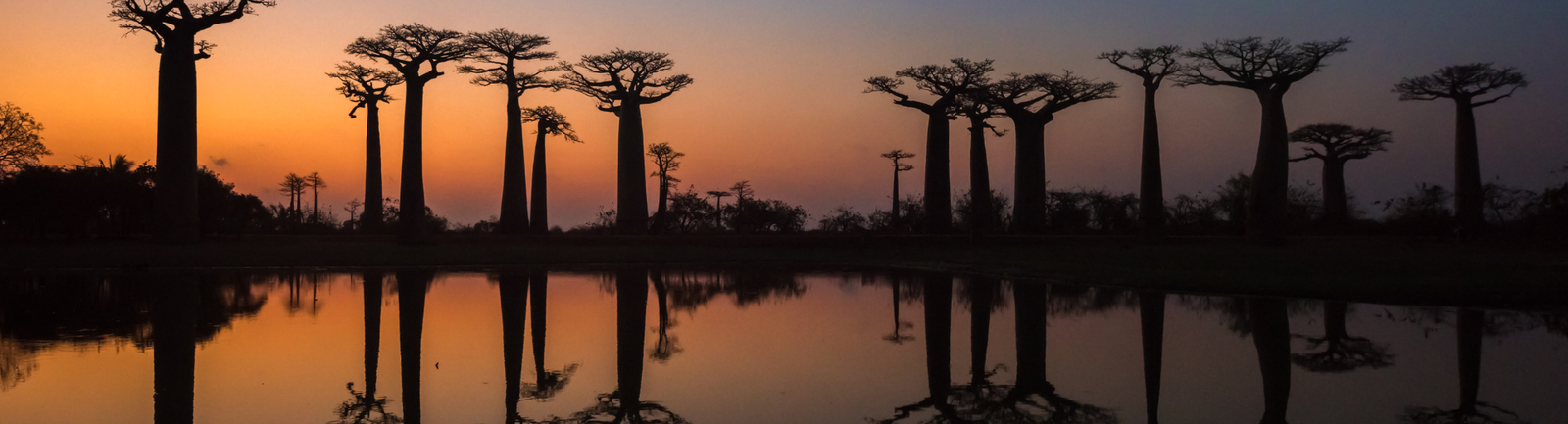
- Avenue of the Baobabs: Iconic dirt road lined with ancient baobab trees, creating one of the most striking landscapes in Madagascar.
Our Lesser-Known Favourites
- Ifaty: Located on the southwest coast, known for its coral reefs and as a base for visiting the spiny forests.
- Ranomafana National Park: Offers lush rainforest and hot springs, and is another excellent spot for viewing a variety of lemurs and other wildlife.
- Île Sainte Marie: A tranquil island off the east coast, great for whale watching during the migration season from July to September.
Did You Know?
- Madagascar is home to over 90% of its wildlife that is not found anywhere else on the planet.
- The island’s lemurs are an iconic symbol of this unique biodiversity.
Food and Cuisine
- Romazava: A hearty stew that is considered the national dish, made with beef, pork, or chicken and a variety of greens.
- Mofo Gasy: Malagasy rice cakes that are a popular breakfast food, often served with coffee.
- Seafood: Being an island, Madagascar offers an abundance of fresh seafood, including fish, shrimp, and crab, often grilled and flavored with local spices.
Literature and Cinema
- “Beyond the Rice Fields” by Naivo: The first novel from Madagascar to be translated into English, providing a historical perspective on the country’s past.
- Madagascan cinema: While still developing, the local film industry is vibrant with documentaries and short films that showcase the island’s cultural and natural heritage.
Practical Information
Best Season to Visit:
- The best time to visit Madagascar is during the dry season from April to October, when the weather is cooler and drier, ideal for exploring the outdoors and wildlife viewing. However, the wet season from November to March showcases lush landscapes and vibrant local life, though some remote areas might be inaccessible.
Temperature:
- Varies considerably by region, from the warm coastal areas to the cooler highlands. Temperatures are generally mild with coastal regions averaging 30°C and the highlands around 25°C.
Visa Requirements:
- Most visitors to Madagascar need a visa, which can be obtained on arrival for stays up to 90 days, depending on the nationality.
Local Currency: Malagasy Ariary (MGA).
- Culture & Dress Code: Conservative dress is recommended, especially when visiting rural communities and religious sites.
- Language: Malagasy and French are widely spoken, with limited English in tourist areas.
- Electronics: Madagascar uses types C, D, E, and J plugs, at 220 V.
- Local emergency numbers: Police: 117; Ambulance: 124.
Before traveling to Madagascar, ensure you consult our Ultimate Packing List to prepare for an adventure that spans rainforests to reefs. Handcrafted goods such as raffia bags, wooden carvings, and vanilla pods make for wonderful souvenirs reflecting Madagascar’s rich natural and cultural heritage.