Mistakes to Avoid When Planning a Safari: A Guide to Purposeful Travel in 2026
What if the greatest risk to your African journey isn’t a missed flight, but a lack of intention? While a high-end price tag often suggests quality, the most common mistakes to avoid when planning a safari usually stem from choosing generic luxury over genuine substance. You likely feel the weight of these decisions, perhaps worrying about the ethics of animal encounters or feeling anxious about the intricate logistics of moving between remote camps. It’s a valid concern because a journey to the wild should be an investment in connection, not just a series of transfers and checklists.
The SCN team has designed this guide to help you move past the noise of mass-market tourism and embrace a more meaningful way of traveling in 2026. You’ll discover how to secure exceptional access to the continent’s most pristine corners while fostering deep bonds with local conservationists and communities. By focusing on thoughtfully designed itineraries and purposeful travel, we ensure every aspect of your journey is seamlessly delivered. We’ll walk you through the essential shifts needed to transform a standard vacation into a curated exploration of the African wild that resonates long after you return home.
Key Takeaways
- Learn why moving beyond a “Big Five” checklist allows for a deeper connection with the ecosystem’s essential character.
- Identify the critical mistakes to avoid when planning a safari to ensure your itinerary prioritizes exceptional access to remote areas over crowded public circuits.
- Understand how to evaluate the conservation impact of lodges to ensure your journey supports the long-term preservation of the African wild.
- Discover how a boutique approach to travel design can seamlessly deliver complex logistics for executive retreats and private group journeys.
- Realize the value of purposeful travel where every shared experience is tailored to achieve specific cultural or professional outcomes.
The Wildlife Checklist Trap: Why Purposeful Design Trumps Sightseeing
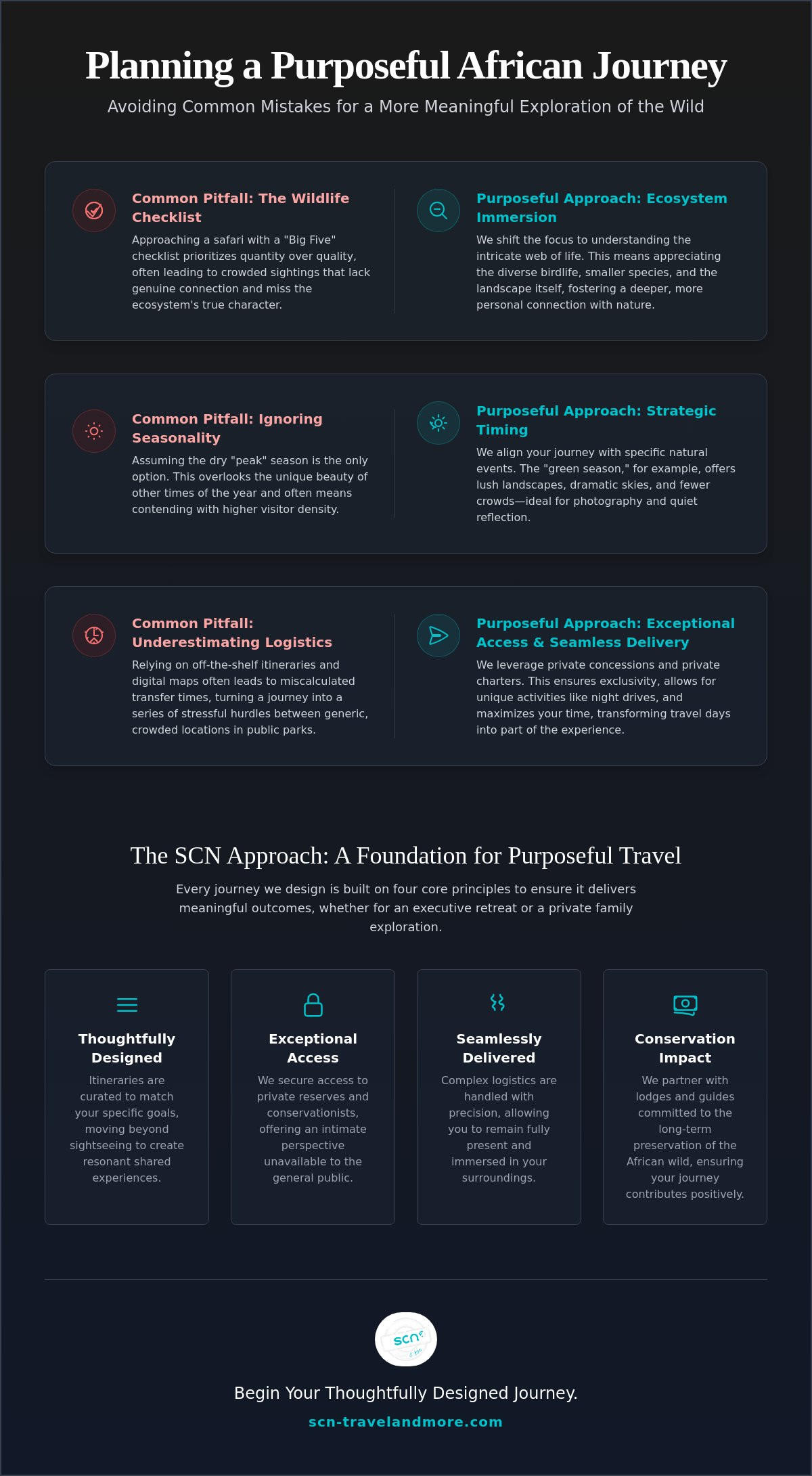
Many travelers approach the African continent as if it were a gallery of static exhibits. They arrive with a list of specific animals to “tick off,” often missing the vibrant, living pulse of the landscape. This checklist mentality is one of the primary mistakes to avoid when planning a safari because it prioritizes the quantity of sightings over the quality of connection. When you focus solely on the destination’s “stars,” you risk overlooking the intricate relationships that sustain the wild. Purposeful travel shifts the focus from simple observation to a deeper understanding of the ecosystem. It’s about recognizing that a meaningful journey is defined by the shared experiences of a group or family as they witness the raw beauty of nature together. By embracing the principles of ecotourism, the SCN team ensures that your presence contributes to the preservation of these delicate environments rather than just consuming them.
The “Big Five” Obsession and Its Limitations
Focusing exclusively on the lion, leopard, rhinoceros, elephant, and buffalo often leads to “traffic jams” in popular parks. Dozens of vehicles might crowd around a single sleeping predator, stripping the moment of its essential character. A more tailored approach encourages you to look closer. The diversity of African Safari Animals includes vibrant birdlife, elusive smaller cats, and fascinating insects that tell the true story of the bush. These sightings often happen in silence, away from the crowds, offering a sense of exclusivity and peace that a checklist simply cannot provide.
Overlooking Regional Seasonality and Migration Patterns
Timing is everything, yet many people assume the driest months are the only viable option. While peak season offers high visibility, it also brings higher density. One of the subtle mistakes to avoid when planning a safari is ignoring the “green season.” This period of afternoon rains and lush landscapes provides a stunning backdrop for photographers and a sense of renewal that feels deeply personal. Whether you’re planning an executive retreat or a private family gathering, aligning your timing with specific outcomes, like the quietude needed for reflection or the drama of the calving season, is what transforms a trip into a thoughtfully designed exploration.
Logistical Missteps and the Importance of Exceptional Access
Planning a multi-country journey across Africa involves a level of complexity that “do-it-yourself” platforms simply cannot handle. One of the most frequent mistakes to avoid when planning a safari is relying on off-the-shelf itineraries that prioritize convenience for the operator over the experience of the traveler. High-end travel requires a more nuanced approach. It’s about ensuring that every transition is part of a larger, purposeful narrative. When logistics are seamlessly delivered, the traveler is free to focus on the landscape and the people around them. Without this professional oversight, a journey can quickly become a series of stressful hurdles rather than a meaningful exploration.
The Private Concession Advantage
The distinction between a public national park and a private concession is often the difference between a crowded sighting and a private moment of wonder. In public areas, vehicle density can be high, and strict regulations prevent off-road driving or night explorations. Private concessions offer exceptional access by allowing guides to follow the rhythm of the wild. These areas operate under strict ethical and sustainable tourism principles, ensuring that low-impact travel remains a priority. This exclusivity allows for walking safaris and night drives, providing a more intimate view of the ecosystem. You can find examples of these pristine environments in our featured destinations.
Miscalculating Transfer Times and Remote Logistics
Distance in the African wild is rarely measured in kilometers; it’s measured in hours. One of the critical mistakes to avoid when planning a safari is assuming that digital maps provide an accurate sense of travel time. A short line on a map often translates to a grueling drive over unpaved bush roads. For our corporate clients, the SCN team frequently integrates private charters into the itinerary. This strategic choice maximizes time spent on executive retreats and team building, allowing participants to arrive at remote camps refreshed and ready to engage. By managing every detail from touchdown to take-off, we remove the logistical burdens that often overwhelm those attempting to plan such complex journeys alone.
Ethical and Environmental Omissions in Safari Planning
One of the most profound mistakes to avoid when planning a safari is viewing the landscape as a merely aesthetic backdrop rather than a living system that requires active protection. In 2026, the discerning traveler understands that true luxury is found in the preservation of the wild. Choosing a lodge simply for its design or amenities without investigating its ecological footprint is a missed opportunity for genuine impact. Conscious travel is about ensuring that your presence helps safeguard the essential character of the location for future generations. It requires a move away from passive observation toward a role as a worldly facilitator of conservation and community support.
The Ethics of Lodge Selection
Evaluating a lodge’s sustainability credentials requires looking past glossy marketing claims. True commitment is found in regenerative practices that actively restore the environment. While many properties mention carbon offsetting, the most impactful choices involve lodges that fund anti-poaching units, utilize 100% renewable energy, or manage land restoration projects. We believe that every journey should leave a positive trace. For a deeper understanding of how we integrate these values, you can explore our Sustainable Luxury Travel Itineraries which prioritize properties with verified regenerative outcomes.
Fostering Deep Connections with Local Communities
Authentic community engagement is often sacrificed for “cultural tourism” performances that feel staged and transactional. A common mistake is participating in tours that treat local people as subjects to be photographed rather than partners in a shared experience. The SCN team focuses on curated cultural immersions that foster interpersonal bonds and mutual respect. This might involve visiting a conservation-led school project or sitting with community leaders to understand their role as stewards of the land. These interactions are thoughtfully designed to ensure that the benefits of your visit reach the people who live alongside the wildlife, creating a meaningful connection that resonates long after you leave the bush.
If you are ready to design a journey that aligns your personal values with the preservation of the African wild, we invite you to explore our curated destinations where purpose and luxury coexist seamlessly.
The SCN Approach: Curating Purposeful African Journeys
The SCN team understands that a journey to Africa is more than a simple getaway. It’s a complex production that requires a visionary’s eye and a facilitator’s patience. While many travelers rely on the advice of friends or generic online reviews, these sources often overlook the nuanced mistakes to avoid when planning a safari that can compromise the depth of the experience. Based in Dubai and drawing on the international background of founding partner Stephanie Neuer, our team operates as a boutique travel design house. We don’t just book rooms; we manifest multi-layered journeys where every detail is tailored to your specific vision. This process creates an atmosphere of trust and exclusivity, where the bond between the designer and the traveler ensures that the final itinerary is a sincere reflection of your desires.
Tailored Planning for Corporate and Private Excellence
A safari can be a powerful catalyst for professional growth or family unity. We specialize in transforming the wild into a space for high-impact corporate teambuilding and executive retreats. By aligning the rhythm of the bush with your professional objectives, we create shared experiences that foster deep interpersonal bonds. Whether it’s a private group journey for affluent families or a strategic gathering for CEOs, our planning process begins with an active discovery phase. We listen to your goals, whether they involve learning, rewarding a team, or simply finding a pristine environment to reconnect. This purposeful design ensures that your investment yields meaningful outcomes that extend far beyond the duration of the trip itself.
Seamless Delivery through a Global Network of Experts
The difference between a standard holiday and a curated exploration lies in the strength of the network behind it. The SCN team leverages a global circle of local conservationists, expert guides, and community leaders to ensure your experience is grounded in authenticity. This expertise allows us to navigate the logistical complexities discussed earlier, providing you with the peace of mind that comes from professional management. Every transition is seamlessly delivered, removing the burdens of remote travel so you can remain present in the moment. We invite you to begin this process of discovery with us. Through a personal consultation, we can move away from the disconnected nature of mass-market tourism and start designing a journey that captures the essential character of the African wild.
Designing Your Purposeful Path to the Wild
A safari should be an intentional investment in connection and discovery. By moving beyond the static wildlife checklist and prioritizing exceptional access to remote concessions, you ensure your journey is both exclusive and impactful. True luxury in 2026 is found in the depth of your shared experiences and the sincerity of your engagement with the landscape. Understanding the common mistakes to avoid when planning a safari allows you to pivot toward a more thoughtfully designed approach where logistics are seamlessly delivered and every outcome is meaningful.
The SCN team brings a wealth of expertise in designing high-impact executive retreats and bespoke private travel for our clients. We leverage a global network of local experts to ensure authenticity while maintaining a steadfast commitment to conscious travel and environmental preservation. We’re here to manifest your complex vision with the care and responsiveness that a person-to-person boutique experience demands. We invite you to begin designing your tailored African journey with the SCN team. Let’s create something unique that captures the essential character of the wild and leaves a lasting positive trace.
Frequently Asked Questions
How far in advance should I start planning a bespoke safari for 2026?
You should ideally begin the planning process 12 to 18 months before your intended departure. This timeframe is necessary to secure the most sought-after lodges and limited permits for activities like gorilla trekking. Starting early is a proactive way to bypass the common mistakes to avoid when planning a safari, ensuring that your journey is built on availability rather than compromise. It allows our team to thoughtfully design every aspect of your exploration.
Is it better to visit one large park or multiple smaller private reserves?
Private reserves often provide a more intimate and flexible experience than large national parks. While national parks are majestic, private concessions offer exclusive benefits like off-road driving and night safaris. These areas allow for a deeper, quieter connection with the landscape. A well-tailored itinerary often prioritizes these private lands to ensure you avoid the crowds and enjoy exceptional access to the wild’s most pristine corners.
What are the most common packing mistakes for a high-end safari?
The most frequent packing errors involve bringing too much luggage or inappropriate clothing. Most bush flights require soft-sided bags with a weight limit of approximately 15 kilograms. It’s also vital to avoid bright colors or dark blues, which can attract tsetse flies. Instead, pack light, breathable layers in neutral tones. High-end camps provide laundry services, so there’s no need to overpack, allowing you to focus on the experience rather than your belongings.
How do I ensure my safari truly benefits local wildlife conservation?
You can ensure a positive impact by selecting operators who prioritize regenerative travel and community engagement. One of the mistakes to avoid when planning a safari is overlooking a lodge’s conservation credentials. The SCN team carefully vets partners to ensure they fund anti-poaching, support local education, and practice sustainable land management. Your journey becomes more meaningful when you know your presence actively supports the preservation of the environment and the well-being of local people.
Can a safari be tailored for a corporate teambuilding retreat?
Safaris are an excellent choice for high-impact executive retreats and corporate teambuilding. The natural world provides a powerful backdrop for fostering interpersonal bonds and strategic thinking. We design these journeys to be purposeful, aligning every activity with your specific professional goals. From private camp takeovers to curated workshops in the bush, our team ensures that the logistics are seamlessly delivered so your leadership team can focus on growth and connection.
What is the difference between a national park and a private concession for photography?
Private concessions offer photographers far more creative freedom than national parks. In a private area, your guide can drive off-road to secure the best lighting and angles for your shots. You aren’t restricted by the sunset curfews found in public parks, allowing for dramatic night photography. This level of exceptional access is critical for those who want to capture the essence of the wild without the distraction of multiple other vehicles.