
How to Plan a Purposeful and Ethical Wildlife Journey in 2026
What if the most profound moment of your next expedition wasn’t just witnessing a tiger in the wild, but knowing your presence directly funded the protection of its habitat? As the global wildlife tourism market is projected to reach over 211 billion dollars in 2026, the line between genuine conservation and clever marketing has never been more difficult to discern. We understand the concern that comes with wanting to explore the world’s most pristine environments while fearing that your investment might inadvertently support animal exploitation or misleading sanctuary claims.
Designing a meaningful encounter requires moving beyond the surface of traditional travel. This guide explains how to plan an ethical wildlife tour by utilizing a rigorous vetting framework that prioritizes animal welfare and local community empowerment. You’ll learn how to navigate the latest transparency standards, including the EU Directive 2024/825 against greenwashing, to ensure every aspect of your journey is purposefully designed. We’ll preview the essential steps for identifying operators who offer exceptional access while maintaining a nature positive impact, giving you the confidence to forge a deep, authentic connection with the wild.
Key Takeaways
- Learn why prioritizing animal biology and behavior over human entertainment is the essential foundation for a truly meaningful wildlife encounter.
- Identify the professional vetting criteria for how to plan an ethical wildlife tour, ensuring every partner in the supply chain meets rigorous conservation standards.
- Discover how to curate itineraries that balance high-end comfort with low-impact logistics by exploring lesser-known destinations that protect over-visited ecosystems.
- Explore how thoughtfully designed conservation initiatives within executive retreats foster shared purpose and deepen team cohesion through collective impact.
- Understand the transition from passive observation to active contribution, ensuring your travel investment supports the long-term restoration of local habitats.
Defining the Principles of Meaningful Wildlife Encounters
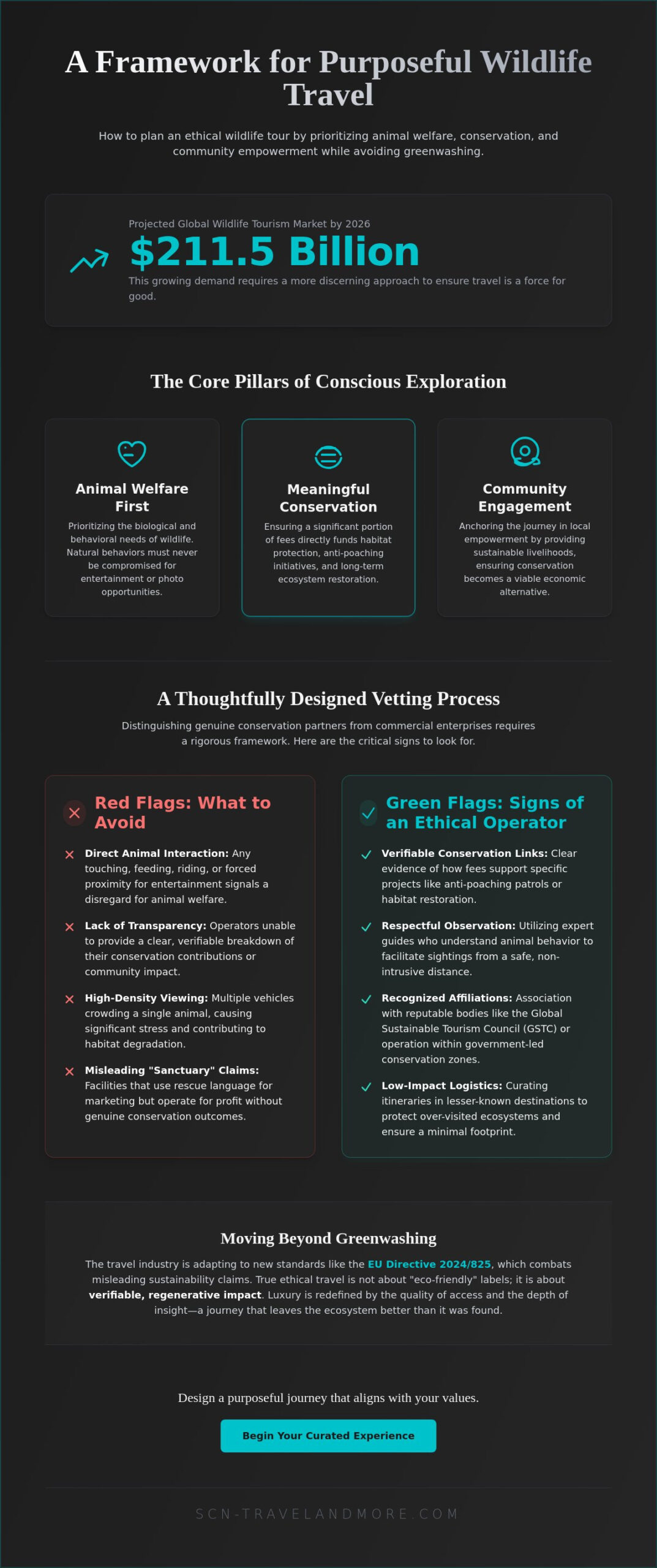
Ethical travel begins with a fundamental shift in perspective. In the past, wildlife encounters were often designed as a spectacle for the traveler. As we move into 2026, the global wildlife tourism market is projected to reach 211.5 billion dollars, reflecting a massive demand for nature-based experiences. However, the SCN team believes that true value lies in prioritizing the biological and behavioral needs of the animal over human entertainment. Understanding the foundational Principles of Wildlife Tourism is the first step in moving from a passive observer to a purposeful contributor.
A primary challenge for discerning travelers is distinguishing between genuine sanctuaries and commercial enterprises that use “rescue” as a marketing tool. Many facilities claim to protect animals while still allowing direct contact or staged performances. When researching how to plan an ethical wildlife tour, it’s essential to look for transparency in how the animals are managed. Environmental and cultural preservation are not separate tracks; they’re a single, intertwined goal. Protecting a species often means empowering the local community that shares its habitat, ensuring that conservation becomes a viable economic alternative to poaching.
The Core Pillars of Conscious Exploration
Animal welfare is the primary concern. This means ensuring natural behaviors are never compromised for a photo opportunity. Conservation impact is equally vital. We verify that a significant portion of fees directly funds habitat protection and anti-poaching initiatives. Finally, community engagement is the anchor of any ethical journey. By providing sustainable livelihoods for local people, we ensure that the ecosystem remains protected long after your visit concludes.
Moving Beyond the Greenwashing
The industry is currently adjusting to new regulations, such as the EU Directive 2024/825, which requires sustainability claims to be backed by verifiable data. When considering how to plan an ethical wildlife tour, you’ll encounter buzzwords like “eco-friendly” or “sustainable” that often lack substance. In the context of our thoughtfully designed journeys, luxury isn’t measured by traditional amenities. Instead, it’s defined by the quality of access to remote landscapes and the depth of insight provided by expert naturalists. Regenerative wildlife travel is a journey that leaves the ecosystem better than it was found.
A Thoughtfully Designed Vetting Process for Private Travel
Identifying the right partners requires more than a digital search or a glance at a brochure. The SCN team relies on a global network of local naturalists and conservationists who provide real-time updates on operator conduct. This ground-level intelligence ensures that every partner in our supply chain adheres to the highest standards of transparency. When you’re considering how to plan an ethical wildlife tour, you should expect a clear breakdown of where conservation fees are allocated. We prioritize operators who can demonstrate exactly how their presence supports the local ecosystem, whether through anti-poaching patrols or habitat restoration projects.
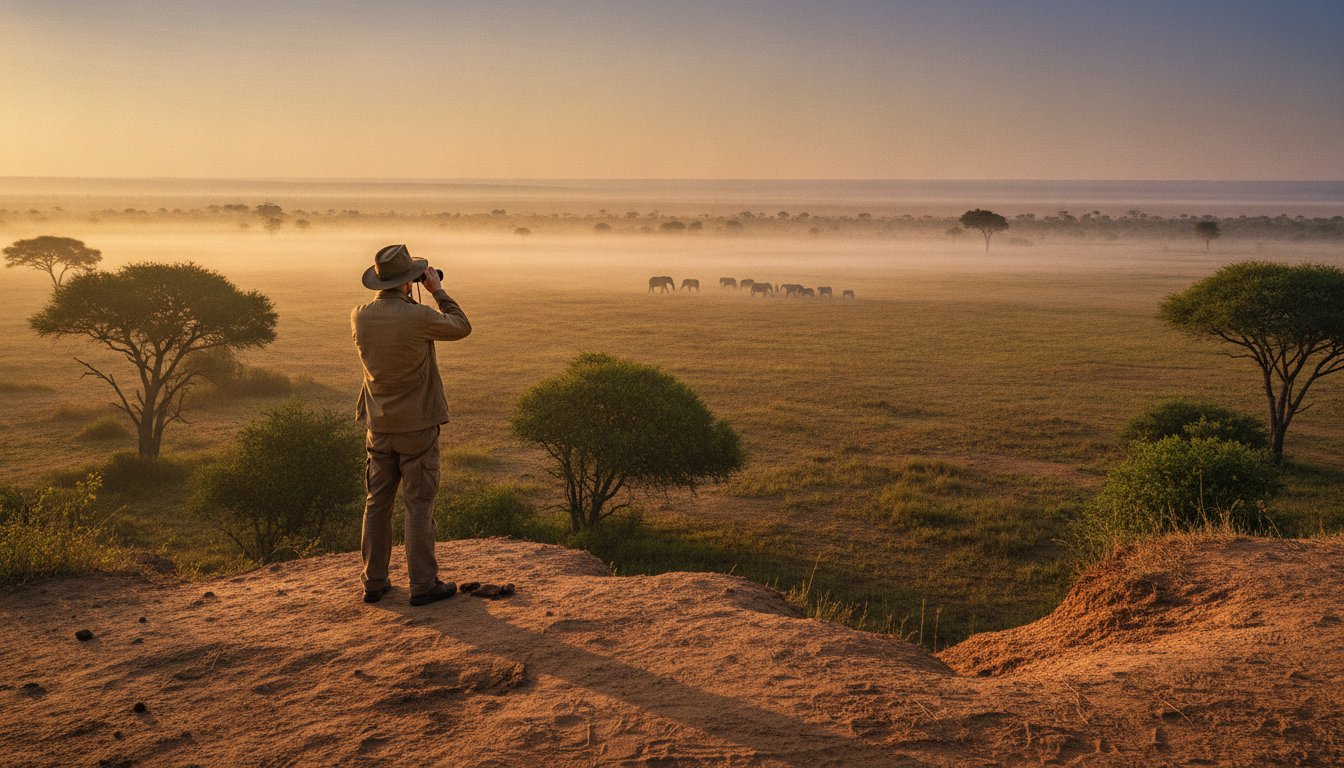
Government-led conservation zones often offer a higher degree of ethical security compared to unregulated private lands. These protected areas are subject to strict Ethical Wildlife Viewing Guidelines that safeguard the integrity of the habitat. We look for “exceptional access” that respects these boundaries. This means utilizing expert guides who understand animal behavior well enough to predict movements, allowing you to observe rare species during their most natural moments without causing stress. It’s the difference between intruding on a hunt and witnessing the rhythm of the wild from a respectful distance.
Red Flags: What to Avoid in 2026
- Any interaction involving touching, feeding, or forced proximity to wild animals, which signals a priority for entertainment over welfare.
- Operators that cannot provide a transparent breakdown of their conservation contributions or community impact.
- High-density viewing areas where multiple vehicles crowd a single animal, leading to significant distress and habitat degradation.
Green Flags: Signs of an Ethical Operator
Reputable operators often hold affiliations with global bodies like the Global Sustainable Tourism Council (GSTC). Their guides aren’t just drivers; they’re trained naturalists or biologists who offer meaningful educational insights that deepen your understanding of the landscape. You’ll also see evidence of long-term partnerships with the local community, ensuring that the benefits of your visit are shared equitably. If you’re ready to explore these remote landscapes through a lens of restoration, the SCN team can help you design a journey to our featured destinations where these standards are seamlessly delivered.
Curating Your Itinerary for Positive Impact
Designing a bespoke journey requires a delicate equilibrium. You don’t have to sacrifice high-end comfort to ensure low-impact logistics. It’s about thoughtful design. For example, the SCN team prioritizes lodges that operate on renewable energy or utilize electric vehicles for silent, non-intrusive observation. This is a core part of how to plan an ethical wildlife tour that feels both exclusive and responsible. By choosing off-the-beaten-path destinations, we reduce the burden on over-visited national parks. This allows ecosystems to breathe while providing you with exceptional access to pristine wilderness.
We often integrate elements of Educational & Impact Travel into leisure journeys. This transforms a standard viewing experience into a purposeful contribution. You might spend a morning with a research team tracking snow leopards or assisting in a local reforestation project. These shared experiences foster a deeper bond between travelers and the natural world. They move beyond simple sightseeing toward a meaningful connection with the land. For broader context on best practices, the National Geographic guide on Responsible Wildlife Tourism Tips offers excellent foundational advice.
Selecting the Right Destination for the Season
Timing is critical. Ethical viewing means avoiding sensitive breeding seasons or nesting periods to prevent habitat disturbance. Destinations like Bhutan or specific private conservancies in Africa are ideal because they strictly limit visitor numbers. This ensures an intimate experience that protects the environment. Understanding the rhythms of nature, such as those detailed in our guide to African Safari Animals, allows us to time your journey with iconic migrations while maintaining a nature-positive impact.
The Role of the Specialist Guide
A private guide is your most important asset in the field. They aren’t just drivers; they’re storytellers and expert naturalists who facilitate a profound connection to the landscape. The SCN team collaborates with local experts who understand the complex ethical boundaries of their specific regions. They ensure every encounter is seamlessly delivered, providing the context and depth that transforms a journey into a life-changing experience. If you’re ready to explore how these principles can be applied to your next group journey, we invite you to view our curated programs for corporate and private groups.
Purposeful Wildlife Journeys for Corporate and Private Groups
For corporate decision-makers and visionary leaders, the natural world offers a powerful setting for strategic reflection and team alignment. Integrating wildlife conservation into executive retreats transforms a traditional meeting into a high-impact experience that resonates far beyond the boardroom. Understanding how to plan an ethical wildlife tour for a group requires a focus on shared impact. When a leadership team collectively contributes to a meaningful conservation project, it strengthens interpersonal bonds through a shared sense of purpose and corporate social responsibility. This isn’t just about observation; it’s about building a legacy together.
The SCN team specializes in designing curated group journeys that prioritize learning and relationship-building. We believe that nature is the ultimate facilitator for deep connection. To ensure these moments are effective, logistics must be seamlessly delivered, especially in remote environments where the complexity of travel can often become a distraction. By removing the burden of coordination, we allow your team to focus entirely on the experience and each other. Whether it’s a private group of affluent friends or a high-level corporate cohort, every itinerary is tailored to achieve specific, lasting outcomes.
Rewarding Teams Through Meaningful Connection
Modern incentive travel is shifting away from generic rewards toward experiences that offer genuine substance. Instead of traditional luxury, consider rewarding your team with a sense of purpose. Imagine participating in a reforestation project in a lesser-known Asian forest or attending a private talk by a lead conservationist in an African reserve. These activities provide a profound sense of achievement that stays with a team long after they return home. For those looking to design such impactful programs, our MICE page offers a glimpse into how we blend professional objectives with nature-positive travel.
The SCN Team’s Commitment to Bespoke Design
Managing the end-to-end logistics of complex, ethical itineraries is where our expertise truly shines. The SCN team manages every detail with a calm authority, ensuring that the promise of “Beyond Travel” is realized in every encounter. We see every journey as a bridge to a deeper understanding of our world and our place within it. By meticulously vetting partners and prioritizing animal welfare, we create a safe space for discovery and growth. In 2026, the ultimate standard of luxury is found in conscious travel that respects the planet while fostering authentic human connection.
Step Into the Future of Regenerative Exploration
The journey toward a nature positive impact begins with a fundamental shift from passive observation to purposeful contribution. We’ve explored how prioritizing the biological needs of animals and utilizing a rigorous vetting process ensures that your presence supports the very ecosystems you seek to experience. By understanding how to plan an ethical wildlife tour through seasonal precision and the guidance of expert naturalists, you can move beyond traditional sightseeing to forge a sincere connection with the wild. These shared experiences don’t just protect habitats; they build lasting interpersonal bonds through a collective sense of purpose.
The SCN team is dedicated to facilitating these immersive journeys for our clients in the UAE and Europe. We leverage a global network of local conservation experts to provide exceptional access while managing every complex logistical detail with understated authority. Whether you’re designing a high impact executive retreat or a bespoke private journey, we ensure that every element is tailored to your specific goals. It’s time to move beyond the surface of travel and embrace a more meaningful way to see the world.
Begin designing your purposeful wildlife journey with the SCN team and discover the profound beauty of travel designed with intent. The world’s most pristine environments are waiting for those ready to visit them with care and integrity.
Frequently Asked Questions
How can I tell if a wildlife sanctuary is actually ethical?
A genuine sanctuary never allows direct physical contact, breeding, or performances. It prioritizes the animals’ welfare over visitor entertainment at all times. Look for transparent reporting on where their animals originated and their long-term rehabilitation goals. If an operator guarantees a photo with an animal, it’s a significant red flag that suggests a commercial enterprise rather than a conservation-led sanctuary.
Is it ever ethical to visit a zoo or aquarium while traveling?
It can be ethical if the institution is accredited by reputable bodies like the World Association of Zoos and Aquariums and focuses heavily on species survival programs. These facilities prioritize education and research over simple display. However, when considering how to plan an ethical wildlife tour, we generally encourage observing animals in their natural habitats where they can express their full range of biological behaviors without restriction.
How much of my travel fee should go toward conservation?
While percentages vary by region, many leading ethical operators allocate significant portions of their revenue to habitat protection and community projects. For example, in 2026, entrance fees for parks like the Serengeti are fixed at 83 dollars per non-resident adult to fund park management. We recommend asking for a clear breakdown of impact fees to ensure your investment supports the restoration of the local environment.
Can a luxury wildlife tour truly be sustainable?
Yes, luxury and sustainability are increasingly intertwined through the concept of regenerative travel. High-end journeys often provide the financial resources necessary for large-scale conservation efforts that mass-market tourism cannot sustain. By utilizing low-impact logistics, such as electric safari vehicles and solar-powered lodges, we ensure that your experience is both exceptionally comfortable and nature positive. The SCN team focuses on tailoring these details to minimize your footprint.
What are the best destinations for ethical wildlife encounters in 2026?
Bhutan and certain private conservancies in Kenya and Tanzania remain top choices due to their strict visitor limits and community-led models. For a lesser-known experience, consider the Mahale Mountains in Tanzania, where non-resident adult fees are 94.40 dollars, or the pristine environments of Costa Rica. These locations offer exceptional access to rare species while maintaining a deep respect for the essential character of the landscape.
How do I handle unethical wildlife practices if I encounter them during a trip?
The most effective response is to document the behavior and report it to local authorities or international welfare organizations. Avoid engaging with the practice or providing financial support, even through pity purchases. When you work with the SCN team, we provide a direct line of communication to our local experts who can address concerns immediately. This responsiveness is a pillar of our commitment to maintaining the highest ethical standards.