
Educational Travel Ideas for Children: Designing Purposeful Family Journeys in 2026
What if your next family holiday didn’t just provide a break from the routine, but actually reshaped the way your children see the world? Many parents find themselves disillusioned by generic kids’ clubs and over-commercialised tourist traps that offer plenty of distraction but very little substance. You’re likely seeking something deeper; a way to spark genuine curiosity and empathy in your children while navigating the world with ease and sophistication.
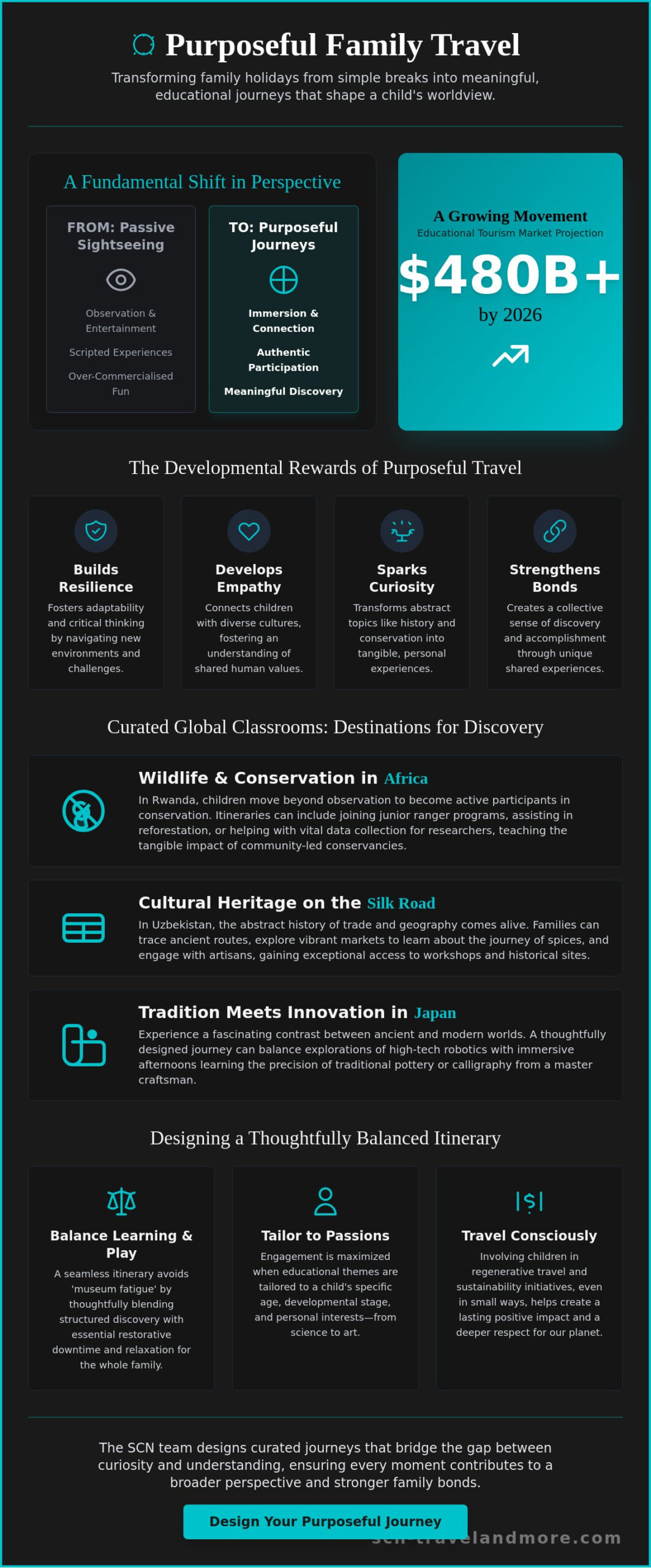
With the global educational tourism market projected to reach over 480 billion dollars in 2026, it’s clear that families are increasingly seeking more than just a change of scenery. This shift toward purposeful travel requires a thoughtful approach to educational travel ideas for children that prioritises authentic cultural immersion over scripted experiences. The SCN team believes that travel should be a bridge between curiosity and understanding. In this article, we’ll share how to design curated, high-impact itineraries that transform a simple journey into a meaningful learning experience. You’ll discover how to balance structured discovery with the relaxation your family deserves, ensuring that every shared moment contributes to a broader global perspective and a stronger family bond.
Key Takeaways
- Understand the distinction between passive sightseeing and purposeful travel that builds resilience and empathy in young minds.
- Explore curated educational travel ideas for children that range from wildlife tracking in Rwanda to tracing the historic Silk Road in Uzbekistan.
- Learn how to structure a thoughtfully designed itinerary that eliminates museum fatigue by balancing learning with restorative downtime.
- Discover the importance of tailoring educational themes to your child’s specific developmental stage and personal passions for maximum engagement.
- Gain insights into the growing trend of regenerative travel and how involving children in sustainability initiatives creates a lasting positive impact.
The Shift to Purposeful Travel: Why Educational Journeys Matter
Purposeful travel isn’t just about the places you visit; it’s about the depth of the connection you form with the world around you. In 2026, we see a distinct move toward slow and meaningful exploration. Families are trading high-speed itineraries for journeys that allow children to engage deeply with local ecosystems and traditions. This transition from passive observation to active participation is the heart of modern educational tourism. By focusing on educational travel ideas for children that prioritise substance over spectacle, parents can bridge the gap between abstract classroom theory and the tactile reality of our planet.
Beyond the itinerary, the psychological rewards are profound. Experiential learning builds a child’s resilience by presenting them with unfamiliar environments that require adaptability and critical thinking. It fosters empathy as they meet people from different walks of life, learning that while our customs vary, our human needs remain the same. The SCN team curates these moments across our featured destinations, ensuring they aren’t just memories but building blocks for a compassionate character.
From Entertainment to Immersion
The traditional resort bubble often offers comfort at the expense of context. In contrast, immersive cultural experiences treat the destination as a living history book. Instead of watching a performance from a distance, your children might learn a traditional craft alongside a master artisan or help track endangered species with local rangers. These shared experiences do more than educate. They strengthen family bonds through a collective sense of discovery and accomplishment that stays with you long after the journey ends.
Fostering Global Citizenship
Curated Global Classrooms: Exceptional Destinations for 2026
While mass-market theme parks offer entertainment, they often fail to ignite the deep-seated curiosity that comes from real-world engagement. For families seeking genuine educational travel ideas for children, the world serves as an expansive, living classroom. In 2026, we’re seeing a shift toward destinations that offer more than a visual backdrop. They provide a platform for active learning through curated experiences that are both intellectually stimulating and emotionally resonant. The SCN team focuses on identifying locations where history, science, and culture converge to create a meaningful narrative for young travellers.
Wildlife and Conservation in Africa
In Rwanda, the focus extends far beyond observing the Big Five. Children can participate in vital reforestation efforts or join junior ranger programs that involve actual data collection for researchers. This hands-on involvement teaches them about the delicate balance of ecosystems and the vital role of community-led conservancies. Understanding the behaviour of African Safari Animals becomes a lesson in biology and ethics rather than just a photo opportunity. These programs empower children to see themselves as active participants in global conservation efforts.
Cultural Heritage and Living Traditions in Asia
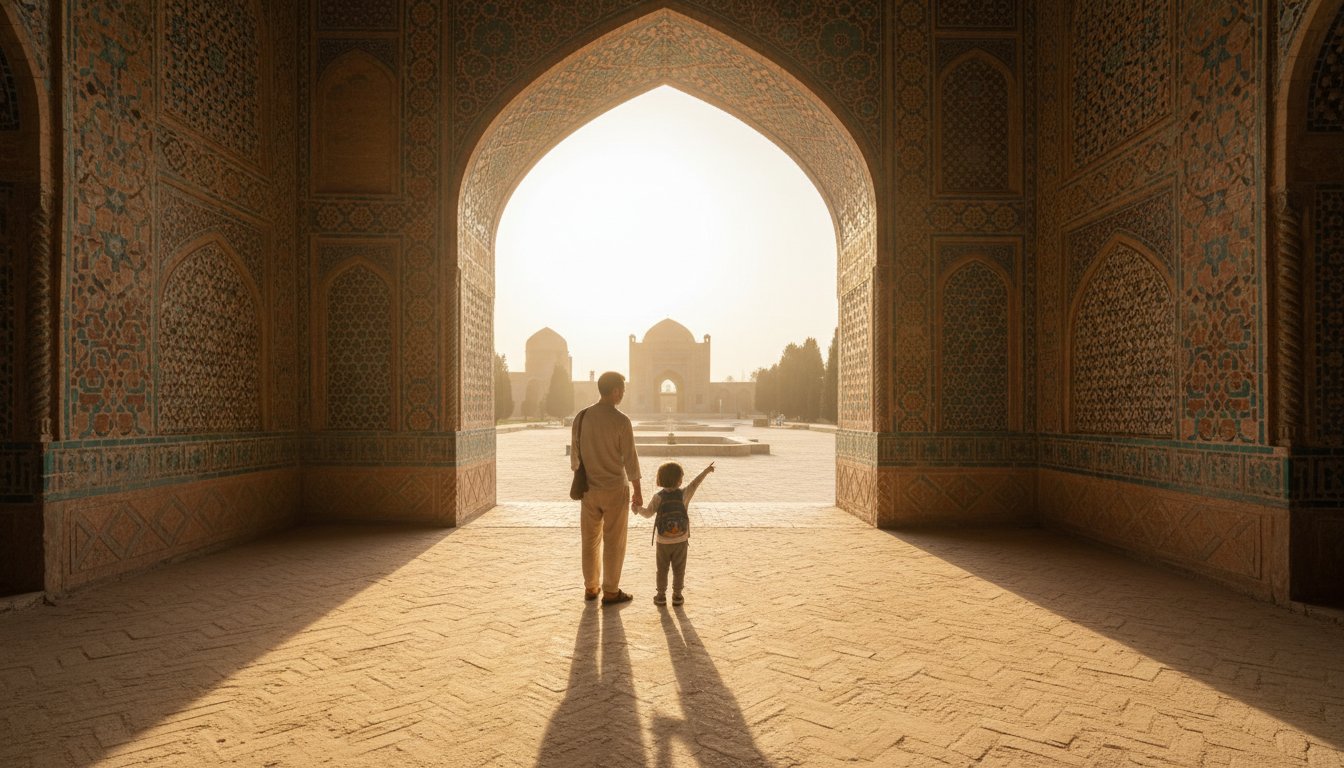
Asia offers a fascinating contrast between ancient traditions and modern innovation. In Japan, children can explore high-tech robotics before spending an afternoon with a master craftsman learning the precision of traditional pottery. Along the Silk Road in Uzbekistan, the history of trade and geography comes alive through the senses. Culinary journeys through local markets teach children about the movement of spices and cultures across centuries. The SCN team prides itself on securing exceptional access to historical sites and workshops that are typically closed to the general public, ensuring a truly tailored experience.
In Europe, the learning continues with private access to artisan workshops in Florence, where the Renaissance is no longer a chapter in a textbook but a tactile reality. For those interested in the natural world, the Azores offer unparalleled opportunities for marine biology exploration. Closer to home, the Middle East is pioneering desert conservation and heritage preservation. In the UAE and Saudi Arabia, families can engage with projects dedicated to protecting indigenous flora and fauna while learning about the nomadic traditions that shaped the region. For those seeking off-the-beaten-path inspiration, our featured destinations provide a starting point for a journey that goes beyond the ordinary.
Designing the Itinerary: Balancing Education with Seamless Delivery
A thoughtfully designed itinerary is the difference between a trip that exhausts and a journey that enlightens. When exploring educational travel ideas for children, the temptation to over-schedule is often the greatest pitfall. True mastery in travel design lies in pacing. By avoiding the common trap of ‘museum fatigue’, we ensure that every site visited remains a source of wonder rather than a chore. By integrating these educational travel ideas for children into a seamlessly managed itinerary, we allow the narrative of the destination to unfold naturally, matching complex themes with a child’s specific developmental stage while providing the comfort and security needed when exploring remote frontiers.
The presence of a private curator is often the element that transforms a visit into a meaningful interaction. These experts don’t just recite facts; they translate the essence of a location into a narrative that resonates with young minds. Whether it’s a marine biologist in the Azores or a historian in Florence, these facilitators provide exceptional access that mass-market tours simply cannot replicate. They act as the bridge between the child’s curiosity and the destination’s deepest secrets.
Tailoring the Experience to the Child
The Logistics of Excellence
For a journey to be truly purposeful, the logistical burden must be entirely removed from the parents. This allows you to focus solely on the shared experiences and interpersonal bonds being formed. Bespoke planning becomes even more essential for multi-generational group journeys, where the needs of a curious eight-year-old must be harmonised with the expectations of an executive or a grandparent. The SCN team’s approach to end-to-end management ensures that every detail, from transit to private access, is seamlessly delivered.
If you are ready to move beyond the ordinary and foster a deeper connection with the world, the SCN team is here to help you design a bespoke learning experience for your family.
The Future of Family Travel: Conscious and Impactful
Regenerative travel represents a profound shift in how we approach the world, moving from a model of consumption to one of contribution. It’s no longer enough to merely leave no trace; the goal is to leave a destination better than it was found. As the global educational tourism market is projected to reach 480.44 billion dollars in 2026, it’s clear that more families are seeking educational travel ideas for children that align with these values. When children lead the way in sustainable initiatives, they develop a sense of agency and a deep connection to the global community. This is the lasting legacy of a purposeful journey: the transition from fleeting memories to actionable change in a child’s worldview.
Consulting with experts is essential to ensure that travel truly benefits local communities rather than disrupting them. The SCN team works closely with local partners to identify projects where family participation can make a genuine difference. This careful curation ensures that every interaction is respectful, meaningful, and designed to foster mutual understanding. By moving beyond the surface of a location, families can discover the essential character of a place while contributing to its preservation.
Regenerative Travel for the Next Generation
Involving children in local sustainability projects transforms a holiday into a lesson in global citizenship. Whether it’s participating in coral reef restoration or supporting heritage preservation projects, these experiences teach the ethics of exploration through direct engagement. Our sustainable luxury travel itineraries are thoughtfully designed to ensure that your family’s presence provides a tangible benefit to the local ecosystem. These shared experiences empower children to see themselves as stewards of the planet, sparking a lifelong commitment to conscious living.
Starting Your Purposeful Journey
The first step in designing a bespoke family itinerary is moving away from the pre-packaged constraints of a traditional agency. A specialist travel designer acts as a worldly facilitator, listening to your family’s specific desires to craft something unique. While a standard agency might focus on logistics, the SCN team focuses on the outcomes of the journey; the learning, the bonding, and the personal growth. We manage the complex logistics with calm authority, allowing you to focus entirely on the experience.
If you’re ready to move beyond travel and embrace a more meaningful way of exploring the world with your family, we invite you to begin the discovery process with us. Together, we can create a tailored journey that inspires curiosity and leaves a positive impact on the world.
Empowering the Young Global Citizen
Designing a family journey in 2026 requires moving beyond the surface of a destination to uncover its essential character. We’ve discussed the importance of balancing structured learning with free exploration and the transformative power of regenerative travel. These elements ensure that your family’s time spent abroad isn’t just a break from routine, but a meaningful investment in your children’s development. By prioritising substance and connection, you’re helping them build the resilience and empathy needed in an increasingly interconnected world.
The SCN team, based in Dubai and supported by a global network of local specialists, excels at providing exceptional access to off-the-beaten-path experiences. We understand that the most impactful educational travel ideas for children are those that feel personal and tailored to their specific interests. By removing the logistical burdens of complex international travel, we allow you to focus entirely on the shared experiences that strengthen interpersonal bonds. Our expertise in curated group journeys ensures that every detail is seamlessly delivered with a level of care that feels intimately personal.
If you’re ready to move beyond traditional tourism and create a journey that leaves a lasting positive impact, we invite you to design your family’s purposeful journey with the SCN team. Together, we can turn a holiday into a powerful catalyst for lifelong curiosity and growth.
Frequently Asked Questions
What age is best for educational travel?
Children of all ages can benefit from purposefully designed journeys, though the focus shifts as they grow. For younger children, nature-based sensory experiences are ideal. As they reach school age, historical narratives and scientific exploration become more engaging. By the teenage years, the emphasis often moves toward social impact and global citizenship. The SCN team ensures that educational travel ideas for children are tailored to the specific developmental stage of your child.
How do I ensure my children stay engaged during cultural tours?
Engagement is maintained by shifting from passive observation to active participation. Instead of traditional lectures, we utilise private curators who specialise in age-appropriate storytelling and interactive discovery. This might involve a scavenger hunt through a historical site or a hands-on workshop with a local artisan. By integrating these educational travel ideas for children into a playful, narrative-driven format, we ensure that curiosity remains high throughout the journey.
What are the most kid-friendly destinations for learning about history?
Europe remains a cornerstone for historical learning, with cities like Florence offering a tactile look at the Renaissance. In Asia, the Silk Road cities of Uzbekistan provide a vivid backdrop for lessons on trade and geography. Closer to home, destinations like AlUla in Saudi Arabia or Petra in Jordan offer exceptional access to ancient civilisations. We focus on off-the-beaten-path locations where history feels like a living story rather than a textbook chapter.
Is bespoke travel planning worth it for a family of four?
Bespoke planning is essential for families who value their time and want to ensure a meaningful outcome for every member. A tailored approach removes the logistical friction often found in mass-market travel, allowing parents to focus entirely on shared experiences. For a family of four, this means balancing the interests of children at different ages while providing the high-end comfort and security that affluent travellers expect from a boutique design service.
Can educational travel be combined with a relaxing holiday?
Purposeful learning and relaxation are not mutually exclusive; they are most effective when thoughtfully balanced. We advocate for a slow travel philosophy that incorporates restorative periods between immersive experiences. This might mean a morning of wildlife tracking followed by a quiet afternoon at a private retreat. By carefully pacing the itinerary, we ensure the family returns home feeling both intellectually enriched and physically refreshed, rather than exhausted by a frantic schedule.
What are some screen-free ways to document a child’s travel experience?
Documenting a journey without screens encourages children to reflect more deeply on their surroundings. We suggest keeping a travel journal for sketching and notes, or collecting small, ethically sourced mementos from local artisans. Analog photography is another excellent tool that forces a child to be more selective and observant. These tactile records become cherished shared experiences that help solidify the lessons learned and the bonds formed during the journey.